
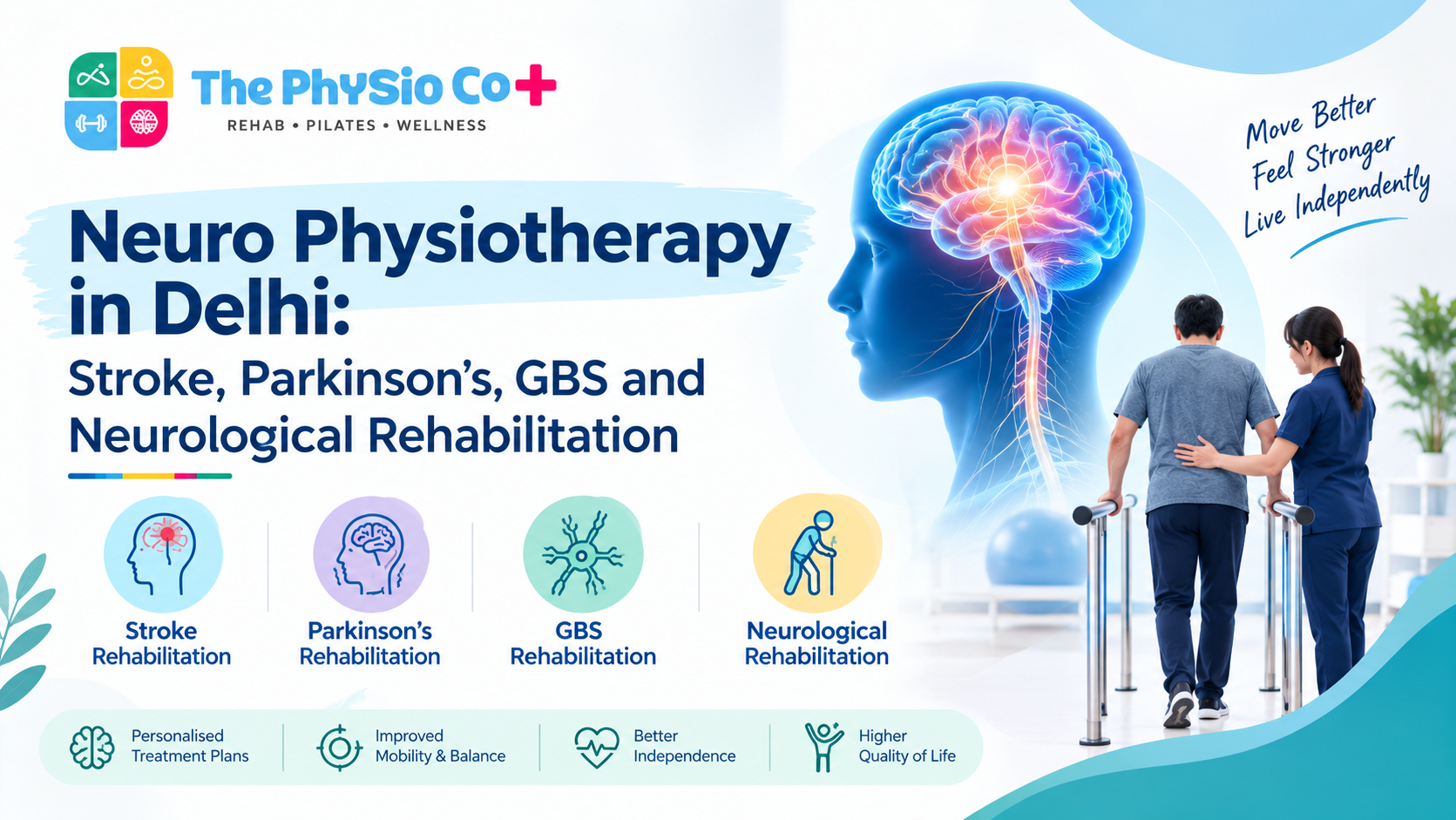

Neuro Physiotherapy in Delhi for stroke, Parkinson’s, GBS and neurological rehabilitation. Get personalized neuro physiotherapy and rehabilitation at The Physio Co+. Neurological conditions can affect movement, balance, coordination, strength, walking ability and independence. With the right rehabilitation approach, physiotherapy can play an important role in helping people improve their movement and function.
Neuro Physiotherapy in Delhi focuses on the assessment and rehabilitation of people with neurological conditions such as stroke, Parkinson’s disease, Guillain–Barré syndrome (GBS), multiple sclerosis, facial palsy and other conditions affecting the nervous system.
At The Physio Co+, neuro rehabilitation is designed around the individual’s symptoms, functional limitations, goals and stage of recovery.
What Is Neuro Physiotherapy?
Neuro physiotherapy, also called neurological physiotherapy, is a specialized area of physiotherapy focused on problems caused by conditions affecting the brain, spinal cord and peripheral nervous system.
Depending on the condition, treatment may focus on:
- Improving muscle strength
- Improving balance and coordination
- Retraining walking and movement
- Improving mobility and transfers
- Managing stiffness and abnormal muscle tone
- Improving posture and body control
- Reducing the risk of falls
- Improving functional independence
You can learn more about physiotherapy in Delhi and the rehabilitation services available at The Physio Co+.
Stroke Rehabilitation in Delhi
A stroke can affect movement, balance, coordination, sensation and the ability to perform everyday activities. Some people may experience weakness on one side of the body, difficulty walking, poor balance or problems using the affected arm and hand.
Stroke rehabilitation in Delhi commonly focuses on restoring functional movement and improving independence.
A stroke rehabilitation program may include:
- Bed mobility and transfers
- Sitting and standing balance
- Walking and gait training
- Lower-limb strengthening
- Upper-limb movement and functional training
- Weight-shifting exercises
- Coordination exercises
- Balance training
- Functional task practice
The goals and progression of stroke rehabilitation depend on the individual’s condition and recovery stage.
Parkinson’s Physiotherapy in Delhi
Parkinson’s disease can affect movement, balance, walking, posture and the ability to perform daily activities.
Parkinson’s physiotherapy in Delhi can focus on maintaining mobility and helping individuals remain as independent and active as possible.
Treatment may include:
- Gait and walking training
- Balance exercises
- Postural exercises
- Strength training
- Mobility exercises
- Movement strategy training
- Turning and transfer practice
- Fall-prevention strategies
A personalized Parkinson’s rehabilitation program can be modified according to the person’s symptoms, abilities and daily requirements.
GBS Rehabilitation in Delhi
Guillain–Barré syndrome (GBS) can cause significant muscle weakness and functional limitations. Recovery can vary considerably from person to person.
GBS rehabilitation in Delhi may focus on gradually restoring strength, mobility and functional independence while avoiding excessive fatigue and overexertion.
Depending on the stage of recovery, physiotherapy may involve:
- Gentle mobility exercises
- Positioning
- Range-of-motion exercises
- Gradual strengthening
- Bed mobility
- Sitting and standing training
- Transfer training
- Progressive gait rehabilitation
- Functional retraining
Multiple Sclerosis Rehabilitation
Multiple sclerosis can cause symptoms such as weakness, fatigue, balance difficulties, coordination problems and changes in mobility.
Multiple sclerosis physiotherapy in Delhi may focus on maintaining mobility, improving strength and balance, managing functional limitations and developing strategies to conserve energy.
Facial Palsy and Bell’s Palsy Physiotherapy
Facial palsy can affect facial movement and function. Depending on the cause and presentation, rehabilitation may involve assessment of facial movement and appropriate therapeutic strategies.
Facial palsy physiotherapy in Delhi should be individualized rather than relying on a one-size-fits-all exercise program.
Balance Training and Vestibular Rehabilitation
Balance problems can occur due to neurological conditions, vestibular disorders, weakness, impaired coordination or other factors.
Balance training physiotherapy may include exercises designed to improve postural control, stability, coordination and confidence during movement.
For appropriate patients, vestibular rehabilitation may be used to address dizziness, balance problems and movement-related symptoms.
Neuro Physiotherapy Assessment
Before starting rehabilitation, a physiotherapist may assess:
- Muscle strength
- Range of movement
- Muscle tone
- Balance
- Coordination
- Walking pattern
- Posture
- Transfers and functional mobility
- Upper- and lower-limb function
- Ability to perform daily activities
- Fall risk
The findings help the physiotherapist develop an individualized rehabilitation plan.
Home Neuro Physiotherapy in Delhi
For individuals who have difficulty travelling because of weakness, mobility limitations, balance problems or other functional challenges, home physiotherapy in Delhi may be an option.
Home-based rehabilitation may focus on:
- Transfers
- Walking
- Bed mobility
- Balance
- Functional activities
- Strength and mobility
- Caregiver education
- Home exercise programs
Whether home physiotherapy or clinic-based rehabilitation is more appropriate depends on the individual’s condition and goals.
How to Choose a Neuro Physiotherapist in Delhi?
When looking for a Neuro Physiotherapist in Delhi, consider whether the physiotherapist:
- Has experience with neurological rehabilitation
- Performs a detailed functional assessment
- Creates an individualized treatment plan
- Tracks progress over time
- Includes functional and task-specific training
- Provides appropriate home exercises
- Communicates clearly with the patient and family
Neuro Physiotherapy in Vasant Kunj
For people looking for Neuro Physiotherapy in Vasant Kunj, access to a rehabilitation clinic can make it easier to maintain consistency with treatment and follow-up.
At The Physio Co+, rehabilitation programs are tailored according to the patient’s condition, functional needs and rehabilitation goals.
Frequently Asked Questions
Can physiotherapy help after a stroke?
Physiotherapy can help address movement, balance, walking, strength and functional limitations following a stroke. The rehabilitation plan depends on the individual’s symptoms and recovery stage.
Is physiotherapy useful for Parkinson’s disease?
Yes. Physiotherapy can help people with Parkinson’s disease work on mobility, balance, walking, strength, posture and functional movement.
How long does GBS rehabilitation take?
Recovery from GBS varies considerably. Rehabilitation duration depends on the severity of weakness, complications, recovery rate and individual functional goals.
Can neuro physiotherapy improve balance?
Balance training can help appropriate patients improve postural control, coordination and functional stability. The exercises should be selected based on the underlying cause of the balance problem.
Do you provide neuro physiotherapy at home?
Home-based neuro physiotherapy may be suitable for people who have difficulty travelling to a clinic because of mobility or functional limitations.
Get Neuro Physiotherapy in Delhi
Neurological rehabilitation is often a gradual process. Consistent assessment, appropriate exercise, functional training and regular progression can help patients work toward meaningful mobility and independence goals.
If you are looking for Neuro Physiotherapy in Delhi, stroke rehabilitation, Parkinson’s physiotherapy, GBS rehabilitation or neurological rehabilitation in Vasant Kunj, The Physio Co+ provides individualized physiotherapy and rehabilitation based on each patient’s condition and functional goals.
The Physio Co+
D-10, Nangal Dewat, Vasant Kunj, New Delhi – 110070
Phone: 9650981969