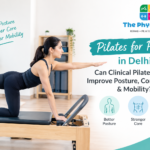


Pilates for Posture in Delhi can improve core strength, mobility and postural control. Discover how clinical Pilates supports better posture and movement.Poor posture is often associated with neck pain, back pain, rounded shoulders, stiffness and discomfort after sitting for long periods. However, posture is much more complex than simply trying to “sit straight.”Our posture naturally changes throughout the day depending on our activity, fatigue, strength, mobility and the position we are in. Rather than trying to maintain one perfect posture all day, the goal should be to develop the strength, mobility and movement control needed to perform daily activities comfortably.
Our posture naturally changes throughout the day depending on activity, fatigue, strength, mobility and the position we are in. Instead of trying to maintain one “perfect” posture, the goal should be to develop the strength, mobility and movement control needed to perform daily activities comfortably.
If you are looking for Clinical Pilates in Delhi or Pilates for posture in Delhi, Pilates can be a useful part of a structured exercise and physiotherapy program.
What Is Good Posture?
There is no single posture that is perfect for everyone. Good postural function is better understood as the ability to:
- Maintain comfortable positions
- Move efficiently
- Change positions regularly
- Control the body during movement
- Tolerate everyday physical activities
- Maintain adequate strength and mobility
Sitting with a rounded back for a short period does not automatically mean that your posture is harmful. Problems may arise when someone stays in one position for long periods or lacks the strength and mobility needed for daily activities.
A physiotherapist in Delhi can assess movement, strength, mobility and symptoms rather than focusing only on appearance.
Can Pilates Improve Posture?
Pilates can help improve postural function by developing:
- Core and trunk strength
- Hip strength
- Shoulder and scapular control
- Spinal mobility
- Body awareness
- Breathing coordination
- Movement control
Rather than simply telling someone to “sit straight,” Pilates provides controlled movement practice that can help develop the physical capacity to move between different positions.
How Does Pilates Help Posture?
1. Builds Core Strength
The muscles around the abdomen, back, pelvis and hips contribute to trunk control. Pilates exercises can progressively strengthen these areas and improve control during activities such as sitting, standing, bending and lifting.
For people searching for Pilates for back pain in Delhi, core and trunk exercises may form part of an individualized program.
2. Improves Body Awareness
Pilates emphasizes controlled movement and awareness of body position. It can help people understand their pelvic position, spinal movement, shoulder control, breathing and weight distribution.
3. Supports Spinal Mobility
Controlled Pilates exercises can involve spinal flexion, extension and rotation. Maintaining comfortable spinal mobility can be useful for people who spend long hours sitting or performing repetitive activities.
4. Strengthens the Upper Back and Shoulders
Exercises targeting the upper back, shoulder muscles and scapular stabilizers can help develop better upper-body movement control.
People experiencing persistent neck symptoms may also benefit from assessment by a neck pain physiotherapist.
5. Improves Hip and Pelvic Control
Postural control does not come only from the spine. The hips and pelvis also contribute significantly to movement.
Pilates may include exercises for the glutes, hip muscles, abdominal muscles and pelvic control.
Pilates Exercises for Posture
Several Pilates exercises can be used to develop strength, mobility and coordination.
Pelvic Tilts
Pelvic tilts help develop awareness and control of pelvic movement. They can be performed lying on the back with the knees bent while gently moving the pelvis through a comfortable range.
Bridge
The bridge works the gluteal muscles while developing hip and trunk control. It should be performed slowly without excessive arching of the lower back.
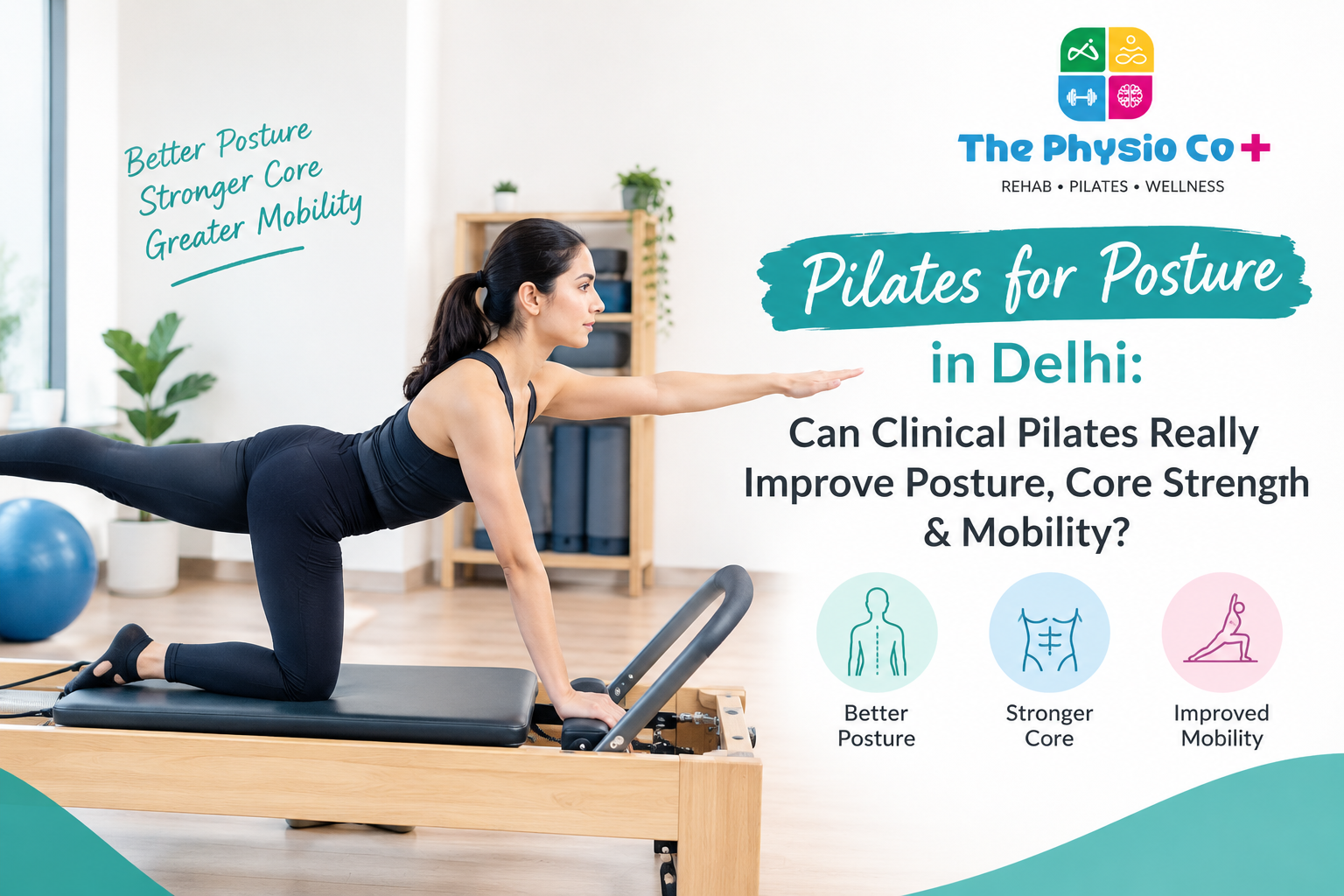
Bird Dog
Bird dog challenges trunk stability while the opposite arm and leg move. It can help develop coordination and control.
Scapular Exercises
Wall slides, resistance-band rows and controlled arm movements can help develop upper-back and shoulder control.
Exercises should be selected according to individual mobility, strength and symptoms.
Pilates for Rounded Shoulders and Forward Head Posture
Rounded shoulders and forward head position are often discussed in relation to prolonged sitting and computer use. However, these positions do not automatically indicate damage.
A Pilates program may include:
- Upper-back strengthening
- Shoulder mobility
- Scapular control
- Thoracic mobility
- Neck movement
- Trunk strengthening
The goal should be improved movement capacity rather than holding the head or shoulders rigidly in one position throughout the day.
Can Pilates Help With Back Pain?
Pilates-based exercise may help some people with persistent or recurrent back pain by improving physical function, trunk strength and exercise tolerance.
However, Pilates is not a guaranteed treatment for every type of back pain. If you are searching for back pain treatment in Delhi or a back pain physiotherapist, an assessment can help determine the most appropriate exercise program.
Clinical Pilates vs Regular Pilates
Clinical Pilates is generally adapted according to an individual’s symptoms, physical capacity and rehabilitation goals.
A physiotherapist may modify:
- Exercise selection
- Resistance
- Repetitions
- Range of movement
- Equipment
- Exercise progression
Clinical Pilates may be incorporated into rehabilitation for people with back pain, neck pain, previous injuries, joint problems and post-surgical rehabilitation.
Reformer Pilates in Delhi
Reformer Pilates in Delhi uses specialized equipment to provide resistance and support during exercises.
It can be adapted to work on core strength, mobility, balance, coordination and overall physical conditioning. For people undergoing rehabilitation, professional guidance can help determine appropriate resistance and progression.
Pilates and Physiotherapy in Delhi
Pilates can be one part of a broader physiotherapy program in Delhi. Depending on individual requirements, physiotherapy may also include strengthening, mobility exercises, manual therapy, movement retraining, balance training and dry needling therapy in Delhi.
Physiotherapy can also support people with conditions such as knee pain, frozen shoulder, arthritis, sports injuries and neurological conditions including stroke and Parkinson’s disease.
Pilates for Posture in Vasant Kunj
For people looking for Pilates for posture in Vasant Kunj, a physiotherapy-based Pilates approach can combine assessment with progressive movement training.
At The Physio Co+, Clinical Pilates can be adapted according to individual goals such as posture, core strength, mobility, rehabilitation and general physical conditioning.
Frequently Asked Questions
Can Pilates really improve posture?
Pilates can help develop strength, mobility, body awareness and movement control, which may contribute to improved postural function.
Is Pilates good for rounded shoulders?
Pilates can include exercises for upper-back strength, shoulder mobility and scapular control, which may help improve movement patterns.
Can Pilates help back pain?
Pilates may be useful for some people with persistent or recurrent back pain when exercises are appropriately selected and progressed.
Can beginners do Pilates?
Yes. Pilates exercises can be modified by changing resistance, range of movement, repetitions and exercise complexity.
Key Takeaway
Pilates can be a useful approach for improving strength, mobility, body awareness and movement control. The goal should not be to maintain one perfect posture all day, but to develop the ability to move comfortably, change positions and tolerate everyday activities.
If you are searching for Clinical Pilates in Delhi, Pilates for back pain in Delhi, Reformer Pilates in Delhi or a physiotherapist in Vasant Kunj, an individualized assessment can help determine the most appropriate exercise and rehabilitation approach.