

Pilates for Posture
Poor posture is often blamed for neck pain, back pain, rounded shoulders and stiffness. But posture is more complex than simply “sitting straight.”
Posture naturally changes throughout the day depending on your activity, fatigue, strength, mobility and the position you are in.
Pilates can help improve posture-related movement and physical capacity, particularly by developing trunk strength, body awareness, mobility and control.
However, Pilates should not be viewed as a way to permanently force the body into one “perfect” posture.
If you are searching for Pilates for posture in Delhi, this guide explains how Pilates may help, which exercises are commonly used and who can benefit from a Pilates-based program.
What Is Good Posture?
There is no single posture that is perfect for everyone.
The human body is designed to move between different positions.
Good postural function is better understood as the ability to:
- Maintain comfortable positions
- Move efficiently
- Change positions regularly
- Control the body during movement
- Tolerate daily physical demands
- Maintain adequate strength and mobility
For example, sitting with a rounded upper back for a short period is not automatically harmful.
Problems may arise when someone spends prolonged periods in one position, has limited movement options or lacks the physical capacity to tolerate their daily workload.
What Is Postural Imbalance?
The term “postural imbalance” is commonly used to describe differences in alignment or movement.
Examples may include:
- Forward head position
- Rounded shoulders
- Increased upper-back rounding
- Excessive anterior pelvic tilt
- Reduced trunk control
- Asymmetrical movement patterns
These observations do not automatically indicate a problem.
Two people can have different postures and both function normally.
Therefore, physiotherapy and Pilates assessment should consider movement, symptoms and function, rather than appearance alone.
Can Pilates Improve Posture?
Pilates can contribute to better postural control by training:
- Core strength
- Trunk control
- Hip strength
- Shoulder and scapular control
- Spinal mobility
- Body awareness
- Breathing coordination
- Movement control
Rather than simply telling someone to “sit straight,” Pilates gives them opportunities to develop the strength and control needed to maintain and change positions comfortably.
How Does Pilates Help Posture?
1. Improves Core Strength
The trunk muscles play an important role in controlling the spine and pelvis during movement.
Pilates exercises can progressively train the muscles around the:
- Abdomen
- Back
- Pelvis
- Hips
Improved trunk strength can help a person control their body during everyday movements.
2. Develops Body Awareness
Pilates places considerable emphasis on controlled movement and awareness of body position.
This can help people recognize:
- Pelvic position
- Spinal movement
- Shoulder position
- Breathing patterns
- Weight distribution
Better awareness can make it easier to change movement habits.
3. Improves Spinal Mobility
Some Pilates exercises involve controlled movement of the spine through flexion, extension and rotation.
Maintaining appropriate spinal mobility can be useful for people who spend long periods sitting or performing repetitive tasks.
4. Strengthens the Upper Back and Shoulders
People who spend many hours working at a desk may benefit from exercises that strengthen the upper back and shoulder muscles.
Depending on the individual’s needs, Pilates exercises can target:
- Scapular stabilizers
- Upper-back muscles
- Shoulder muscles
- Trunk muscles
This can support better control of the upper body during daily activities.
5. Improves Hip and Pelvic Control
Postural control does not come only from the spine.
The hips and pelvis contribute significantly to how the body moves.
Pilates can include exercises targeting:
- Gluteal muscles
- Hip abductors
- Hip extensors
- Deep abdominal muscles
Improving hip strength and control may help with movement efficiency.
Pilates Exercises for Posture
A Pilates program should be individualized, but several exercises are commonly used to develop strength, mobility and control.
1. Pelvic Tilt
Pelvic tilting helps develop awareness and control of pelvic movement.
How to do it:
- Lie on your back with your knees bent.
- Keep your feet comfortably on the floor.
- Gently move your pelvis to flatten and then release the lower back.
- Perform the movement slowly.
- Avoid using excessive force.
The goal is controlled movement rather than holding the pelvis in one position permanently.
2. Bridge
The bridge strengthens the posterior chain and can help develop hip and trunk control.
How to do it:
- Lie on your back with your knees bent.
- Keep your feet hip-width apart.
- Gently engage your abdominal muscles.
- Lift your pelvis from the floor.
- Avoid excessive arching of the lower back.
- Lower slowly.
The exercise can be progressed as strength improves.
3. Bird Dog
Bird dog challenges trunk stability while the arms and legs move.
How to do it:
- Start on your hands and knees.
- Keep your spine comfortable and controlled.
- Slowly extend one arm and the opposite leg.
- Avoid rotating the trunk.
- Return to the starting position.
- Repeat on the opposite side.
This exercise trains coordination and trunk control.
4. Scapular Control Exercises
Exercises involving controlled movement of the shoulder blades can help improve upper-body strength and awareness.
Examples may include:
- Resistance-band rows
- Wall slides
- Scapular retraction exercises
- Pilates arm movements
The appropriate exercise depends on the individual’s shoulder mobility and strength.
5. Pilates Roll Down
A controlled roll-down can be used to explore spinal movement.
How to perform it:
- Stand comfortably.
- Keep the knees relaxed.
- Slowly allow the head and upper spine to move forward.
- Continue through a comfortable range.
- Return to standing with controlled movement.
This exercise should not be forced, particularly if you have back or neck symptoms.
6. Swimming
The Pilates swimming exercise challenges the back muscles, trunk control and coordination.
It should be performed only when the person has sufficient strength and can maintain good control.
For beginners, the exercise can be modified by moving one arm or leg at a time.
Pilates for Forward Head Posture
Forward head posture is often discussed in relation to prolonged computer and mobile-phone use.
However, the presence of a forward head position does not automatically mean that the neck is damaged.
A Pilates program may address:
- Cervical movement
- Upper-back mobility
- Scapular control
- Trunk strength
- Neck muscle control
Exercises should focus on improving movement capacity rather than trying to hold the head rigidly in one position all day.
Pilates for Rounded Shoulders
Rounded shoulders may be associated with prolonged sitting, individual anatomy, muscle capacity and movement habits.
Pilates may help by incorporating exercises for:
- Upper-back strength
- Scapular control
- Shoulder mobility
- Thoracic mobility
- Trunk control
Examples include rows, wall exercises and controlled arm movements.
Pilates for Anterior Pelvic Tilt
Anterior pelvic tilt refers to a position in which the pelvis is tilted forward.
A certain amount of pelvic tilt is normal and varies between individuals.
It does not automatically indicate a problem.
If someone has symptoms or difficulty controlling pelvic movement, Pilates may incorporate:
- Glute strengthening
- Abdominal strengthening
- Hip mobility
- Pelvic control exercises
- Movement retraining
The objective should be improved movement capacity rather than forcing the pelvis into a single position.
Can Pilates Reduce Back Pain?
Pilates may help some people with chronic or recurrent low back pain, particularly when included as part of an appropriate exercise program.
Potential benefits may include improvements in:
- Physical function
- Trunk strength
- Movement confidence
- Exercise tolerance
- General physical activity
However, Pilates is not a guaranteed cure for every type of back pain.
Back pain has many possible causes, and exercise should be selected according to the individual’s presentation.
Can Pilates Help Neck Pain?
Pilates-based exercise may also be useful for people with some types of persistent neck pain.
A program may include:
- Neck movement
- Upper-back mobility
- Scapular strengthening
- Trunk strengthening
- Breathing exercises
- Postural movement training
If neck pain is associated with significant neurological symptoms such as progressive weakness or numbness, an appropriate medical assessment should be obtained.
Pilates vs Gym Exercises for Posture
Both Pilates and conventional resistance training can contribute to improved physical capacity.
| Pilates | Strength Training |
|---|---|
| Emphasizes controlled movement | Emphasizes progressive resistance |
| Strong focus on body awareness | Strong focus on strength development |
| Can train trunk control | Can build substantial muscle strength |
| Often incorporates mobility | Can be adapted for mobility |
| Useful for movement coordination | Useful for progressive loading |
They do not have to compete with each other.
Many people can benefit from combining Pilates with appropriate strength training.
Clinical Pilates vs Regular Pilates
Clinical Pilates is generally adapted according to an individual’s physical condition, symptoms and rehabilitation goals.
A physiotherapist may modify:
- Exercise selection
- Resistance
- Repetitions
- Range of movement
- Equipment
- Progression
This can be particularly useful for people with:
- Back pain
- Neck pain
- Previous injuries
- Joint problems
- Post-surgical rehabilitation
- Movement-control difficulties
Regular Pilates classes may be more general and may not be designed around an individual’s specific rehabilitation needs.
Who Can Benefit From Pilates for Posture?
Pilates may be useful for people who:
- Sit for long periods
- Work at a computer
- Want to improve core strength
- Experience recurrent back discomfort
- Have neck or shoulder stiffness
- Want to improve movement control
- Are returning to exercise
- Want structured exercise for mobility and strength
It can also be adapted for beginners.
Who Should Get Assessed Before Starting Pilates?
If you have a significant injury or persistent symptoms, it is better to be assessed before starting a new exercise program.
Professional assessment may be particularly appropriate if you have:
- Severe or worsening pain
- Recent surgery
- Significant neurological symptoms
- Persistent numbness or weakness
- Major joint instability
- Recent trauma
- Unexplained symptoms
A physiotherapist can determine which exercises are appropriate and how they should be progressed.
How Often Should You Do Pilates for Posture?
There is no single frequency that works for everyone.
A consistent exercise routine is generally more useful than occasional intense sessions.
Your program may combine:
- Pilates sessions
- Home exercises
- Walking
- Strength training
- Mobility exercises
- Regular movement breaks
The appropriate frequency depends on your goals, current fitness and symptoms.
How Long Does It Take to See Results?
There is no guaranteed timeline.
Changes in strength, movement confidence and exercise tolerance can develop gradually with consistent training.
Factors that influence progress include:
- Starting fitness level
- Training frequency
- Exercise selection
- Exercise progression
- Sleep and recovery
- Existing injuries
- Daily activity levels
The goal should be sustainable improvement rather than expecting a permanent posture change after a few sessions.
Can Pilates Permanently Fix Your Posture?
This is one of the most common questions.
The answer is more nuanced than simply “yes” or “no.”
Pilates can help improve strength, movement control, mobility and body awareness, which may influence how you hold and move your body.
However, there is no single ideal posture that the body needs to maintain all day.
Instead of trying to permanently “fix” posture, a more useful goal is to develop the ability to:
Move well → build strength → change positions regularly → tolerate daily activities → stay physically active.
Tips for Better Postural Health
Alongside Pilates, consider:
Move Regularly
Avoid staying in one position for prolonged periods.
Strengthen the Whole Body
Do not focus only on the neck or back.
Change Your Working Position
Adjust your desk, chair and screen according to your individual needs.
Take Movement Breaks
Stand up, walk around or perform a few gentle movements during long periods of sitting.
Build Exercise Gradually
Increase exercise volume and resistance progressively.
Don’t Fear Normal Posture Variations
Your posture does not need to look exactly like someone else’s.
Pilates for Posture in Delhi
If you are searching for Pilates for posture in Delhi, a structured program can help you develop strength, mobility and movement control rather than simply trying to maintain a rigid posture.
At The Physio Co+, Clinical Pilates can be adapted according to individual goals, including posture, core strength, mobility, back and neck comfort, rehabilitation and general physical conditioning.
Sessions can be designed for beginners as well as people returning to exercise after an injury.
For patients in and around Vasant Kunj, a physiotherapy-based Pilates approach can combine exercise assessment with progressive movement training.
Related services: Clinical Pilates | Physiotherapy in Delhi | Back Pain Physiotherapy | Neck Pain Physiotherapy
Frequently Asked Questions
Can Pilates really improve posture?
Pilates can help improve strength, mobility, body awareness and movement control, which may contribute to better postural function.
How often should I do Pilates for posture?
There is no universal schedule. Consistent practice combined with appropriate progression is generally more useful than occasional intensive sessions.
Is Pilates good for rounded shoulders?
Pilates can include exercises that improve upper-back strength, shoulder mobility and scapular control, which may help some people with rounded-shoulder movement patterns.
Can Pilates help forward head posture?
Pilates may help improve neck and upper-back movement, trunk control and scapular strength. However, the aim should not be to hold the head rigidly in one position.
Can Pilates help back pain?
Pilates-based exercise can be useful for some people with persistent or recurrent back pain, particularly when appropriately prescribed and progressed.
Is Clinical Pilates better than regular Pilates?
Clinical Pilates is generally individualized around a person’s symptoms, physical capacity and rehabilitation goals. Whether it is appropriate depends on the individual’s needs.
Can beginners do Pilates?
Yes. Pilates exercises can be modified for beginners by changing resistance, range, repetitions and exercise complexity.
Can Pilates replace physiotherapy?
Not necessarily. Pilates is an exercise approach. Physiotherapy may involve assessment, education, exercise therapy and other interventions depending on the individual’s condition.
How long does it take to improve posture with Pilates?
There is no fixed timeline. Progress depends on factors such as exercise consistency, strength, mobility, symptoms and daily activity.
Key Takeaway
Pilates can be a useful tool for improving strength, mobility, body awareness and movement control, all of which can contribute to healthier postural function.
But the goal should not be to maintain one “perfect” posture all day.
A stronger and more practical goal is to develop the capacity to move comfortably, change positions, tolerate daily activities and remain physically active.
If you are looking for Pilates for posture in Delhi, Clinical Pilates in Delhi or Pilates for back and neck pain in Vasant Kunj, an individualized assessment can help determine the most appropriate exercise program.
References
- Wells C, Kolt GS, Bialocerkowski A. Defining Pilates exercise: a systematic review. Complementary Therapies in Medicine.
- Cottrell MA, et al. Clinical Pilates exercises for rehabilitation and musculoskeletal conditions: evidence from systematic reviews and clinical studies.
- Lim ECW, Poh RLC, Low AY, Wong WP. Effects of Pilates-based exercises on pain and disability in individuals with chronic low back pain: systematic review and meta-analysis.
- World Health Organization. WHO Guidelines on Physical Activity and Sedentary Behaviour.
- American College of Sports Medicine. Exercise and physical activity recommendations for healthy adults.
SEO Setup
Primary Keyword:
Pilates for Posture in Delhi
Secondary Keywords:
- Clinical Pilates for Posture
- Clinical Pilates in Delhi
- Pilates for Posture Correction
- Pilates for Back Pain Delhi
- Pilates for Neck Pain Delhi
- Pilates Classes in Delhi
- Reformer Pilates Delhi
- Pilates for Rounded Shoulders
- Pilates for Forward Head Posture
- Posture Correction Physiotherapy Delhi
- Posture Correction Exercises
- Physiotherapy and Pilates Delhi
- Clinical Pilates Vasant Kunj
- Pilates for Back Pain Vasant Kunj
Suggested URL Slug:/blog/pilates-for-posture-in-delhi/
SEO Title:
Pilates for Posture: Can It Really Help? | Delhi Guide
Meta Description:
Can Pilates improve posture? Learn how Clinical Pilates may help with strength, mobility, core control and posture-related back and neck problems in Delhi.
Suggested Internal Links:
- Clinical Pilates →
https://thephysiocoplus.com/ - Pilates for Back Pain → your existing Pilates article
- Physiotherapy in Delhi →
https://thephysiocoplus.com/ - Neck Pain Physiotherapy → your cervical spondylosis article
- Back Pain Physiotherapy → your spine-related article
- Postnatal Physiotherapy → your existing postnatal article
Suggested Blog Banner Text:
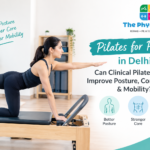
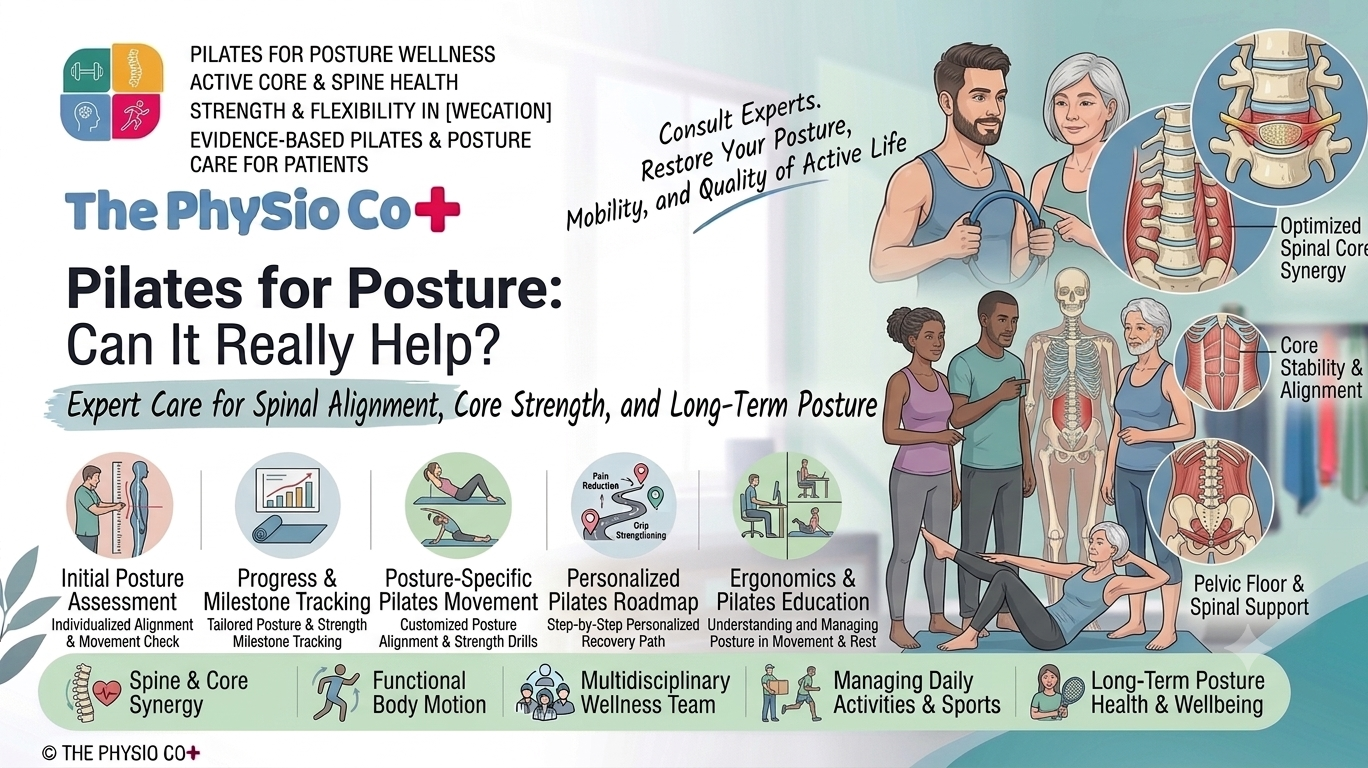
Pilates for Posture
Can It Really Help?
Optional subtitle:
Strength • Mobility • Core Control • Better Movement