

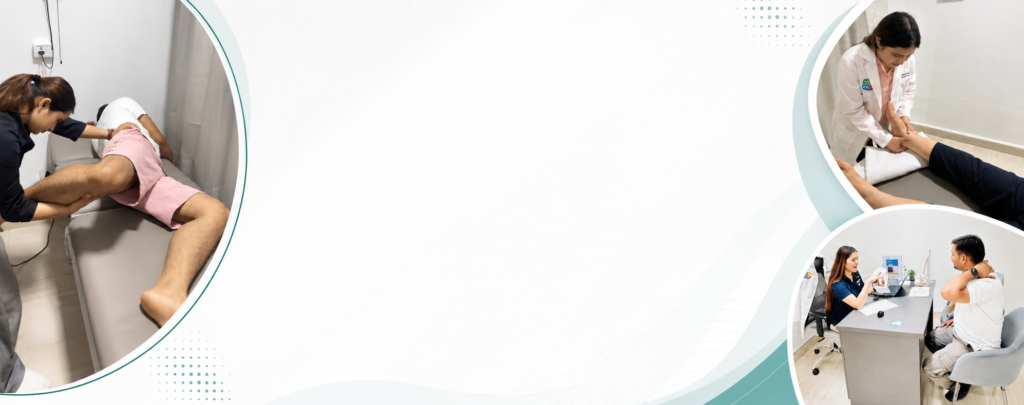

Osteoarthritis
Osteoarthritis is one of the most common joint conditions and can affect everyday activities such as walking, climbing stairs, getting up from a chair, exercising and even gripping objects.
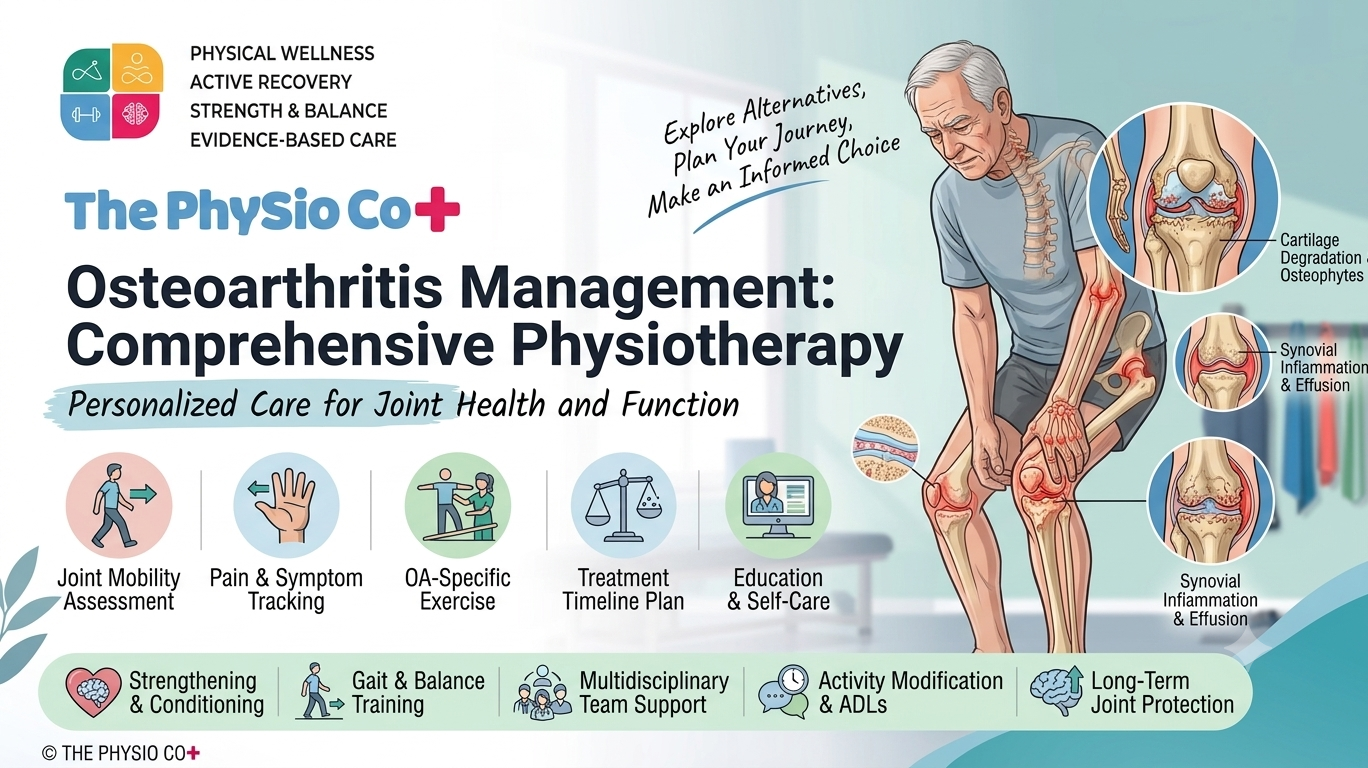
It is often described as a condition in which the “cartilage wears away,” but osteoarthritis is more complex than cartilage loss alone. Changes can occur throughout the joint, including the cartilage, bone, joint lining and surrounding tissues.
The knee, hip, hands and spine are among the commonly affected areas.
While osteoarthritis cannot always be completely reversed, appropriate management can help reduce symptoms, improve physical function and make daily activities easier.
Physiotherapy and exercise are important components of osteoarthritis management, particularly when pain, stiffness or reduced strength is affecting daily life.
What Is Osteoarthritis?
Osteoarthritis (OA) is a condition involving changes in the structure and function of a joint.
It can involve:
- Articular cartilage
- Bone beneath the cartilage
- Joint lining
- Ligaments
- Muscles surrounding the joint
Over time, these changes can contribute to pain, stiffness and reduced movement.
Osteoarthritis most commonly affects weight-bearing joints such as the knees and hips, but it can also affect the hands, spine and other joints.
Is Osteoarthritis the Same as Arthritis?
No.
Arthritis is a broad term used for conditions affecting joints.
There are many types of arthritis, including:
- Osteoarthritis
- Rheumatoid arthritis
- Psoriatic arthritis
- Gout
- Other inflammatory and autoimmune joint conditions
Osteoarthritis is generally considered a degenerative joint condition, whereas conditions such as rheumatoid arthritis involve systemic inflammation and autoimmune mechanisms.
Because treatment differs between conditions, an accurate diagnosis is important.
What Causes Osteoarthritis?
There is not always one single cause.
Factors associated with osteoarthritis include:
Age
The likelihood of osteoarthritis generally increases with age.
Previous Joint Injury
A previous ligament, cartilage or other joint injury can increase the risk of developing osteoarthritis in that joint.
Repetitive Joint Loading
Certain occupational or sporting activities may place repeated loads on particular joints.
Body Weight
Higher body weight can increase mechanical loading on weight-bearing joints such as the knees and hips and is associated with a higher risk of osteoarthritis.
Genetics
Some people may have a greater predisposition to osteoarthritis because of genetic factors.
Joint Structure
Certain structural characteristics can influence the way forces are distributed through a joint.
Importantly, osteoarthritis is not simply the result of “wear and tear.”
Common Symptoms of Osteoarthritis
Symptoms can vary significantly between individuals.
Common symptoms include:
- Joint pain
- Stiffness
- Reduced range of movement
- Difficulty walking
- Difficulty climbing stairs
- Pain when getting up from a chair
- Reduced strength
- Joint tenderness
- Swelling in some cases
- Difficulty with prolonged activity
Osteoarthritis symptoms can fluctuate. A person may experience periods when symptoms are relatively mild and other periods when activities become more difficult.
Osteoarthritis of the Knee
The knee is one of the most commonly affected joints.
People with knee osteoarthritis may experience:
- Knee pain while walking
- Pain when climbing stairs
- Difficulty standing after sitting
- Morning or after-rest stiffness
- Reduced knee movement
- Difficulty squatting
- Reduced leg strength
- Difficulty walking for longer distances
Some people may also experience a sensation of grinding or clicking.
However, joint sounds alone do not necessarily mean that significant joint damage is present.
Osteoarthritis of the Hip
Hip osteoarthritis can cause pain around the:
- Groin
- Front of the thigh
- Buttock
- Side of the hip
Common difficulties include:
- Walking
- Getting into or out of a car
- Putting on shoes or socks
- Climbing stairs
- Standing for prolonged periods
- Moving the hip through its full range
Osteoarthritis of the Hands
Osteoarthritis can also affect the joints of the fingers and thumb.
Symptoms may include:
- Finger joint pain
- Stiffness
- Reduced grip strength
- Difficulty opening jars
- Difficulty using small objects
- Difficulty with household activities
Hand exercises and activity modification may be useful depending on the affected joints.
Does Osteoarthritis Cause Constant Pain?
Not necessarily.
Osteoarthritis symptoms can vary considerably.
Some people have structural changes visible on imaging but experience relatively little pain, while others may experience significant symptoms that interfere with everyday activities.
Pain is influenced by multiple factors, not only what appears on an X-ray.
This is why treatment should consider the person’s symptoms, physical function and goals rather than imaging alone.
How Is Osteoarthritis Diagnosed?
Diagnosis is usually based on a combination of:
- Medical history
- Symptoms
- Physical examination
- Functional assessment
Imaging such as X-rays may be used when clinically appropriate.
An X-ray can show structural changes such as joint-space narrowing and bony changes, but imaging findings do not always correspond directly to the amount of pain a person experiences.
Can Physiotherapy Help Osteoarthritis?
Yes.
Physiotherapy is an important part of conservative osteoarthritis management.
A physiotherapist can assess:
- Joint mobility
- Muscle strength
- Balance
- Walking pattern
- Functional limitations
- Activity tolerance
- Movement strategies
The treatment program can then be tailored to the individual’s symptoms and goals.
Physiotherapy Treatment for Osteoarthritis
Treatment may include several components.
1. Strengthening Exercises
Strengthening the muscles around an affected joint can improve the person’s ability to perform everyday activities.
For knee osteoarthritis, exercises may target:
- Quadriceps
- Hamstrings
- Gluteal muscles
- Calf muscles
The exercise program can be progressed gradually according to the person’s ability.
2. Range-of-Motion Exercises
Joint stiffness can make movement difficult.
Appropriate mobility exercises may help maintain or improve available movement.
Examples may include:
- Knee flexion and extension
- Hip mobility exercises
- Ankle mobility
- Gentle hand and finger movements
The exact exercises depend on the joint involved.
3. Aerobic Exercise
People with osteoarthritis can benefit from appropriate cardiovascular activity.
Depending on the person’s condition, options may include:
- Walking
- Cycling
- Swimming
- Water-based exercise
- Low-impact aerobic exercise
Exercise intensity should be adjusted according to symptoms and fitness level.
4. Balance Training
For people with lower-limb osteoarthritis, balance exercises may be incorporated when appropriate.
This can be particularly relevant for older adults or individuals who feel less confident while walking.
5. Functional Training
Physiotherapy does not have to focus only on isolated exercises.
Treatment can include practising activities that matter to the individual, such as:
- Sit-to-stand
- Stair climbing
- Walking
- Squatting
- Getting in and out of a chair
- Getting into a vehicle
The aim is to transfer improvements from exercise into everyday life.
Osteoarthritis Exercises
There is no single exercise program suitable for everyone with osteoarthritis.
A physiotherapist may prescribe exercises based on the affected joint and the person’s current ability.
For knee osteoarthritis, examples can include:
Straight Leg Raise
This can help strengthen the quadriceps while keeping the knee relatively straight.
Sit-to-Stand
This is a functional strengthening exercise that works several lower-limb muscle groups.
Knee Extension
Controlled knee extension can help maintain movement and strengthen the quadriceps.
Step-Ups
Step-up exercises can help build strength needed for stairs and other functional activities.
Glute Strengthening
Exercises targeting the hip muscles may help improve lower-limb strength and function.
Exercises should be progressed gradually rather than performed aggressively.
Should You Exercise If You Have Osteoarthritis?
In many cases, yes.
Pain can make people afraid of movement, but avoiding activity completely can contribute to reduced strength and physical capacity.
A suitable exercise program can help improve:
- Strength
- Mobility
- Physical function
- Exercise tolerance
- Confidence with movement
Exercise selection and intensity should be individualised.
If an exercise produces significant or persistent worsening of symptoms, the program should be reviewed.
Can Weight Loss Help Knee Osteoarthritis?
For people with overweight or obesity and knee osteoarthritis, weight management can be an important part of treatment.
Reducing body weight can decrease the load placed on the knee during everyday activities and may help improve pain and physical function.
Weight management should be approached as part of an overall health strategy rather than as the only treatment for osteoarthritis.
Does Osteoarthritis Mean You Should Stop Walking?
Not necessarily.
Walking is often an appropriate form of physical activity for people with osteoarthritis.
The amount and intensity should be adjusted according to the individual’s symptoms, fitness and functional capacity.
Instead of completely avoiding walking, a person may benefit from gradually building their walking tolerance.
Do You Need Surgery for Osteoarthritis?
Not everyone with osteoarthritis requires surgery.
Management can include:
- Education
- Exercise
- Physiotherapy
- Weight management when appropriate
- Activity modification
- Medication prescribed by a medical professional
- Other medical treatments when indicated
For people with severe symptoms and significant functional limitations who have not improved sufficiently with non-surgical management, joint replacement or other surgical options may be considered by an appropriate specialist.
The decision depends on the individual’s clinical situation.
Physiotherapy After Knee Replacement for Osteoarthritis
Some people with advanced knee osteoarthritis eventually undergo total knee replacement.
Physiotherapy can be important both before and after surgery.
After knee replacement, rehabilitation may focus on:
- Knee mobility
- Strength
- Walking
- Balance
- Swelling management
- Functional activities
- Stair training
- Gradual return to normal activities
The rehabilitation program should follow the surgeon’s and physiotherapist’s recommendations.
Osteoarthritis vs Rheumatoid Arthritis
These conditions are different.
| Osteoarthritis | Rheumatoid Arthritis |
|---|---|
| Commonly associated with joint structural changes and degeneration | Autoimmune inflammatory condition |
| Often affects knees, hips, hands and spine | Often affects multiple joints, commonly in a symmetrical pattern |
| Pain can be related to activity and joint loading | Inflammatory symptoms can include prolonged morning stiffness and joint swelling |
| Usually does not cause systemic inflammation in the same way as RA | Can have systemic effects |
| Management commonly includes exercise and physical activity | Requires medical management of the inflammatory disease, alongside rehabilitation |
Persistent joint swelling, prolonged morning stiffness or symptoms affecting multiple joints should be medically assessed.
When Should You See a Physiotherapist?
Consider seeing a physiotherapist if osteoarthritis is affecting:
- Walking
- Exercise
- Stairs
- Squatting
- Getting up from a chair
- Work
- Sports
- Daily activities
A physiotherapist can help develop an exercise and activity plan appropriate for your condition.
When Should You See a Doctor?
Medical assessment may be appropriate if:
- Joint pain is severe or rapidly worsening
- There is significant swelling
- The joint becomes hot and very painful
- You have unexplained fever
- There has been a significant injury
- You develop sudden inability to bear weight
- Symptoms are unusual or do not fit your previous pattern
Not every painful joint is osteoarthritis, so an appropriate diagnosis is important.
Osteoarthritis Physiotherapy in Delhi
If you are looking for osteoarthritis physiotherapy in Delhi, treatment should focus on your specific joint, symptoms, physical capacity and daily goals.
At The Physio Co Plus in Vasant Kunj, physiotherapy can include:
- Joint mobility exercises
- Progressive strengthening
- Balance training
- Functional rehabilitation
- Walking rehabilitation
- Exercise prescription
- Activity modification
- Post-operative rehabilitation when required
The goal is to help patients remain active and improve their ability to perform everyday activities.
Frequently Asked Questions About Osteoarthritis
Can physiotherapy cure osteoarthritis?
Physiotherapy cannot necessarily reverse the structural changes associated with osteoarthritis, but it can help manage symptoms and improve strength, mobility and function.
What is the best exercise for osteoarthritis?
There is no single best exercise for everyone. A combination of strengthening, aerobic activity, mobility and functional exercise may be appropriate depending on the person’s condition.
Is walking good for knee osteoarthritis?
Walking can be an appropriate form of physical activity for many people with knee osteoarthritis. The amount should be adjusted according to symptoms and physical capacity.
Can knee osteoarthritis be reversed?
The structural changes associated with osteoarthritis are not generally considered reversible. However, symptoms and physical function can often be improved with appropriate management.
Does osteoarthritis always get worse?
Not necessarily. Symptoms can fluctuate, and their progression varies between individuals.
Can physiotherapy delay knee replacement?
Physiotherapy and exercise can help improve symptoms and function in people with knee osteoarthritis. Whether surgery is eventually required depends on the individual’s symptoms, functional limitations and clinical situation.
Final Takeaway
Osteoarthritis does not mean you have to stop moving.
Although osteoarthritis involves structural changes within a joint, appropriate exercise, physical activity and physiotherapy can help manage symptoms and maintain function.
A personalised rehabilitation program may include strengthening, mobility exercises, aerobic activity, balance training and functional exercises depending on the affected joint and the individual’s goals.
If knee, hip or other joint pain is affecting your everyday activities, a physiotherapy assessment can help determine an appropriate rehabilitation approach.
The Physio Co Plus
D-10, Nangal Dewat, Vasant Kunj, New Delhi – 110070
Physiotherapy | Rehabilitation | Neuro Physiotherapy | Clinical Pilates