


Total Knee Replacement Physiotherapy in Delhi: Complete TKR Rehabilitation Guide
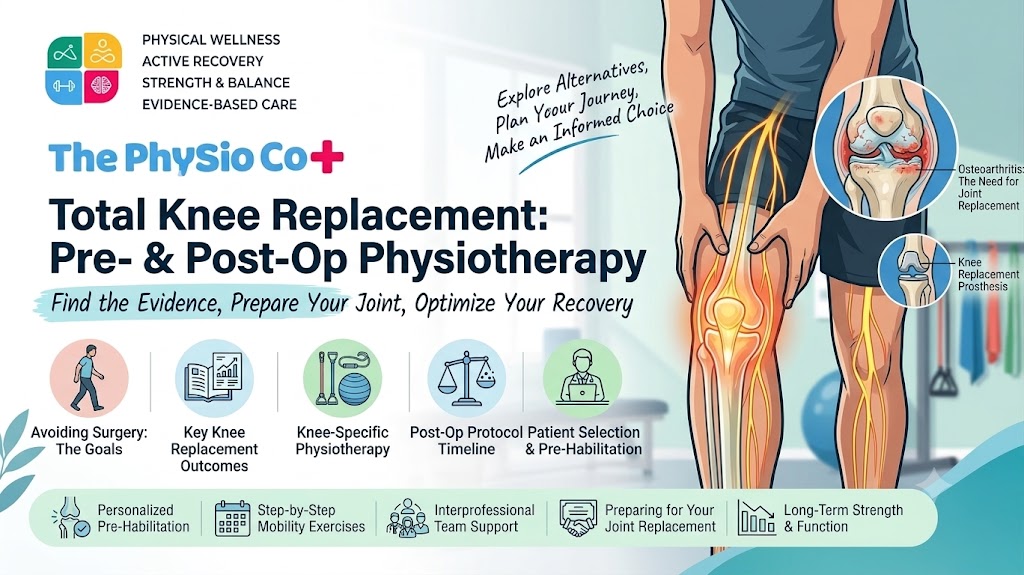
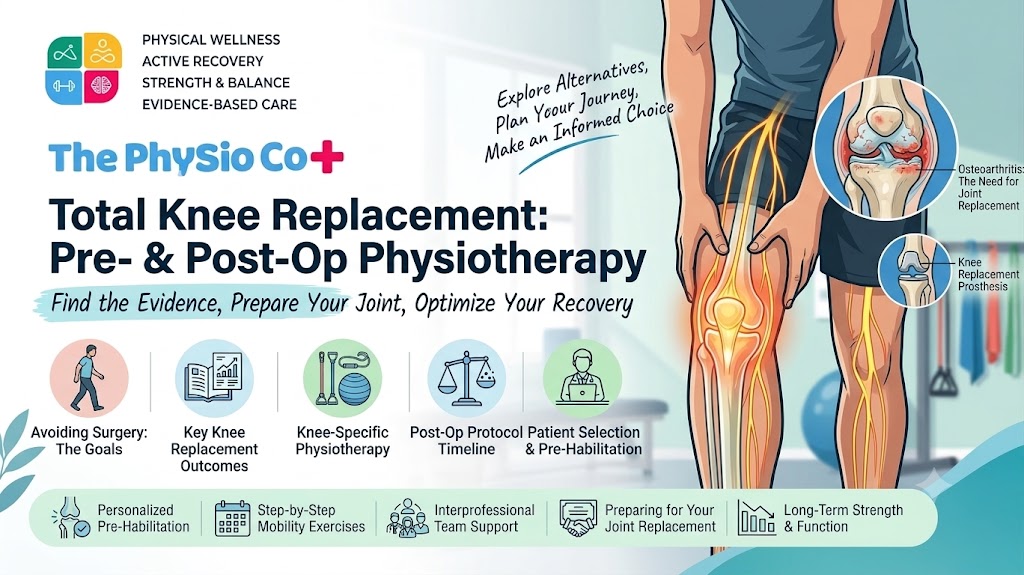
A total knee replacement (TKR), also called total knee arthroplasty (TKA), is a major procedure used to replace damaged surfaces of the knee joint. While the surgery addresses the damaged joint, rehabilitation plays an important role in helping you regain knee movement, strength, walking ability and confidence.
Physiotherapy usually begins very early after surgery. Patients are commonly helped to stand and walk with an appropriate walking aid, while exercises are introduced to restore movement and muscle function. (nhs.uk)
If you’re searching for best TKR physiotherapy in Delhi, understanding the rehabilitation process can help you know what to expect before and after surgery.
What Is Total Knee Replacement?
Total knee replacement is a surgical procedure in which damaged parts of the knee joint are removed and replaced with artificial components.
It may be recommended when severe knee problems, commonly associated with conditions such as advanced osteoarthritis, cause persistent pain and significant difficulty with everyday activities.
The goals of knee replacement include reducing pain and improving knee function. (Cambridge University Hospitals)
However, surgery is only one part of the recovery process.
Rehabilitation helps you work towards:
- Better knee movement
- Improved leg strength
- Better walking ability
- Improved balance
- Greater independence with daily activities
- Gradual return to appropriate physical activities
Why Is Physiotherapy Important After TKR?
After surgery, the muscles around the knee and lower limb can be weak, while pain, swelling and stiffness may temporarily restrict movement.
Physiotherapy helps address these problems through a progressive rehabilitation programme.
The NHS recommends following prescribed exercises after knee replacement because they help with long-term knee strength and movement. (nhs.uk)
Evidence reviewed by the American Academy of Orthopaedic Surgeons also supports supervised exercise during the first two months after TKA for improving physical function. (American Academy of Orthopaedic Surgeons)
When Does Physiotherapy Start After Knee Replacement?
Physiotherapy generally starts very early after surgery, often while the patient is still in hospital.
The early goals may include:
- Getting out of bed safely
- Standing
- Walking with an appropriate walking aid
- Learning how to use stairs
- Starting basic knee exercises
- Managing movement and swelling
- Learning how to perform exercises safely
Patients are generally progressed according to their individual recovery and medical team’s instructions. (nhs.uk)
TKR Physiotherapy: What Does Rehabilitation Include?
A TKR rehabilitation programme is not simply about bending and straightening the knee.
It may progress through several stages.
1. Pain and Swelling Management
Pain and swelling are common following knee replacement.
Your physiotherapist may guide you regarding:
- Positioning
- Elevation
- Appropriate activity levels
- Exercise dosage
- Movement
- Walking
- Gradual progression of activities
Swelling can remain present for several weeks or months, so rehabilitation needs to be progressed according to symptoms and recovery. (Bexley MSK)
2. Regaining Knee Range of Motion
Restoring knee movement is an important rehabilitation goal.
Exercises may include:
- Assisted knee bends
- Heel slides
- Seated knee bends
- Knee extension exercises
- Gentle stretching
For example, hospital rehabilitation programmes commonly include exercises designed to improve both knee flexion and extension. (NHS FHFT)
Your physiotherapist will determine the appropriate intensity and progression based on your individual presentation.
3. Quadriceps Strengthening
The quadriceps muscles can become weak following knee surgery.
Early rehabilitation may therefore include exercises such as:
- Quadriceps sets
- Straight-leg raises when appropriate
- Seated knee extensions
- Progressive strengthening exercises
As recovery progresses, strengthening can become more functional.
This may include:
- Sit-to-stand exercises
- Step-ups
- Squats
- Calf raises
- Resistance exercises
- Functional strengthening
A progressive programme helps you build the strength needed for everyday activities.
4. Walking Rehabilitation After TKR
Walking is an important part of recovery.
Initially, you may need a:
- Walking frame
- Crutches
- Walking sticks
The walking aid is gradually reduced as strength, balance and confidence improve.
Hospital physiotherapy programmes commonly teach patients how to walk safely and progress their walking aids. (nhs.uk)
Your physiotherapist may also assess:
- Step length
- Weight distribution
- Knee control
- Walking speed
- Balance
- Ability to walk without an aid
The aim is not simply to walk without a stick—it is to develop a safe and efficient walking pattern.
5. Balance Training
Balance can be affected after knee replacement because of pain, weakness and changes in movement.
Later-stage rehabilitation may therefore include:
- Tandem standing
- Single-leg balance
- Weight-shifting exercises
- Step exercises
- Functional balance activities
More challenging balance exercises should be introduced progressively and safely. Rehabilitation resources from the Royal National Orthopaedic Hospital include progressive balance and functional exercises as part of later TKR rehabilitation. (Royal National Orthopaedic Hospital)
6. Functional Rehabilitation
The ultimate goal of TKR rehabilitation is to help you return to your normal activities.
Physiotherapy may therefore progress from basic exercises to activities such as:
- Getting in and out of a chair
- Walking longer distances
- Climbing stairs
- Getting in and out of a car
- Household activities
- Returning to appropriate exercise
- Improving confidence with daily movement
Later-stage programmes can be adapted to individual goals, including activities such as Pilates, recreational exercise or specific functional tasks. (Royal National Orthopaedic Hospital)
What Exercises Are Done After TKR?
Exercises vary according to the stage of recovery and your individual condition.
Common rehabilitation exercises can include:
Early-stage exercises
- Ankle pumps
- Quadriceps contractions
- Heel slides
- Gentle knee extension
- Assisted knee flexion
Intermediate exercises
- Straight-leg raises
- Seated knee extensions
- Sit-to-stand
- Calf raises
- Progressive strengthening
Later-stage exercises
- Step-ups
- Squats
- Balance exercises
- Functional strengthening
- Cardiovascular conditioning
- Activity-specific exercises
Hospital rehabilitation programmes commonly recommend gradual progression rather than immediately performing advanced exercises. (Royal National Orthopaedic Hospital)
Important: Do not copy an exercise programme from the internet without considering your surgery, wound healing, pain, swelling, strength and surgeon/physiotherapist’s advice.
How Long Does TKR Rehabilitation Take?
There is no single recovery timeline that applies to everyone.
Recovery depends on factors such as:
- Age
- General health
- Pre-surgery strength and mobility
- Pain and swelling
- Knee range of motion
- Muscle strength
- Balance
- Activity level
- Other medical conditions
- Rehabilitation participation
The NHS notes that full recovery after knee replacement can take several months or longer. (nhs.uk)
Some people progress quickly, while others require a longer period of rehabilitation.
The important goal is progress, rather than comparing your recovery with someone else’s.
Can Physiotherapy Improve Knee Movement After TKR?
Yes. Restoring knee movement is one of the key objectives of rehabilitation.
A structured exercise programme can help improve knee flexion and extension. AAOS evidence has also reported improved physical function and knee flexion/extension range of motion with supervised exercise programmes following TKA. (American Academy of Orthopaedic Surgeons)
If your knee remains significantly stiff, painful or swollen, your rehabilitation programme may need to be reassessed.
What If My Knee Is Still Stiff After TKR?
Some stiffness is common during recovery.
However, persistent or significant stiffness should not simply be ignored.
Your physiotherapist can assess:
- Knee flexion
- Knee extension
- Swelling
- Muscle strength
- Walking pattern
- Functional limitations
- Exercise technique
- Overall progression
If there are concerns about your recovery, your surgeon or medical team may also need to reassess you.
When Can You Walk Without a Walker or Stick?
There is no universal date for stopping a walking aid.
Some people progress from a walker to crutches or sticks and eventually walk independently. Others need an aid for longer.
The decision should depend on:
- Balance
- Strength
- Pain
- Knee control
- Walking pattern
- Confidence
- Safety
The NHS advises progressing walking aids as you become confident and safe, rather than following a fixed deadline. (nhs.uk)
Can You Climb Stairs After TKR?
Yes, stair training is commonly included in rehabilitation.
Initially, you may need to use a specific technique with your walking aid and handrail. Your physiotherapist can teach you how to safely manage stairs.
As strength and control improve, rehabilitation can progress towards more normal stair climbing.
Can Physiotherapy Help With TKR Recovery at Home?
Yes.
After discharge, patients are often given a home exercise programme alongside follow-up rehabilitation.
A home programme may focus on:
- Knee movement
- Quadriceps activation
- Strength
- Walking
- Swelling management
- Functional activities
The Royal National Orthopaedic Hospital recommends gradual progression of home exercise and activity following TKR. (Royal National Orthopaedic Hospital)
However, exercises should be individualised rather than blindly following a generic online programme.
What Should You Avoid After Knee Replacement?
Your surgeon and physiotherapist should provide instructions specific to your surgery.
During the early recovery period, NHS guidance includes avoiding excessive twisting and following prescribed exercises and activity recommendations. It also advises against kneeling until your doctor says it is appropriate. (nhs.uk)
You should also avoid pushing through severe or progressively worsening symptoms without professional guidance.
What Are the Signs That You Should Contact Your Doctor?
Contact your medical team if you develop concerning symptoms such as:
- Increasing rather than improving pain
- Significant or rapidly increasing swelling
- Wound problems
- Fever or feeling unwell
- Calf pain or swelling
- Sudden shortness of breath
- Sudden deterioration in function
Some complications following surgery require prompt medical assessment.
Do not rely on physiotherapy alone when you have potentially serious post-operative symptoms.
Prehabilitation Before TKR
Physiotherapy isn’t only useful after knee replacement.
Pre-operative exercise, sometimes called prehabilitation, may help you prepare for surgery.
Depending on your condition, this can include:
- Quadriceps strengthening
- Hip strengthening
- Knee mobility exercises
- Walking
- General conditioning
- Education about post-operative rehabilitation
The NHS recommends discussing exercises and preparation with your healthcare team before knee replacement. (nhs.uk)
Better preparation can also help you understand what to expect during the early recovery period.
How The Physio Co+ Can Help With TKR Rehabilitation in Delhi
At The Physio Co+, TKR rehabilitation focuses on an individualised approach rather than giving every patient the same exercise programme.
A physiotherapy assessment may look at:
- Knee range of motion
- Pain and swelling
- Quadriceps and lower-limb strength
- Walking pattern
- Balance
- Functional limitations
- Current activity level
- Individual recovery goals
Based on the assessment, rehabilitation can be progressed from basic movement and strengthening towards functional activities.
TKR Physiotherapy in Vasant Kunj, Delhi
If you’re looking for knee replacement physiotherapy in Delhi, The Physio Co+ provides physiotherapy and rehabilitation services in Vasant Kunj.
The Physio Co+
D-10, Nangal Dewat, Sector D, Vasant Kunj
New Delhi, Delhi 110070
Phone: +91 9650981969
Explore Physiotherapy at The Physio Co+
Frequently Asked Questions About TKR Physiotherapy
1. When should physiotherapy start after TKR?
Physiotherapy usually begins very early after surgery, often during the hospital stay. Early rehabilitation commonly includes walking, basic exercises and education about safe movement. (nhs.uk)
2. How long do you need physiotherapy after knee replacement?
The duration varies from person to person. Some people require a shorter rehabilitation period, while others need several months of progressive exercise and functional training.
3. Can physiotherapy reduce stiffness after TKR?
Physiotherapy can help restore knee movement through appropriately prescribed mobility and exercise programmes. Persistent or significant stiffness should be discussed with your healthcare team.
4. How can I strengthen my knee after TKR?
Strengthening usually progresses from basic quadriceps activation to functional and resistance exercises as your recovery allows. (Royal National Orthopaedic Hospital)
5. When can I walk normally after TKR?
There is no fixed timeline. Walking ability depends on strength, balance, pain, knee control and individual recovery.
6. Can I do Pilates after knee replacement?
Some patients may eventually return to appropriately modified Pilates or other low-impact exercise, but the timing and exercises should be discussed with your surgeon and physiotherapist. Rehabilitation should be progressed gradually. (Royal National Orthopaedic Hospital)
7. Is physiotherapy necessary after TKR?
Rehabilitation is an important part of recovery after knee replacement. Early physiotherapy commonly helps patients begin walking, perform exercises and work towards restoring strength and movement. (nhs.uk)
Final Takeaway
Total knee replacement is not the end of the recovery process—it is the beginning of rehabilitation.
A structured TKR physiotherapy programme can help you work on knee mobility, muscle strength, walking, balance and functional independence.
Recovery takes time, and the appropriate rehabilitation programme depends on your individual surgery, symptoms, medical history and goals.
If you’re searching for best TKR physiotherapy in Delhi, a personalised assessment can help determine what your knee needs at each stage of recovery.
The Physio Co+ — TKR Physiotherapy & Rehabilitation in Vasant Kunj, Delhi.