

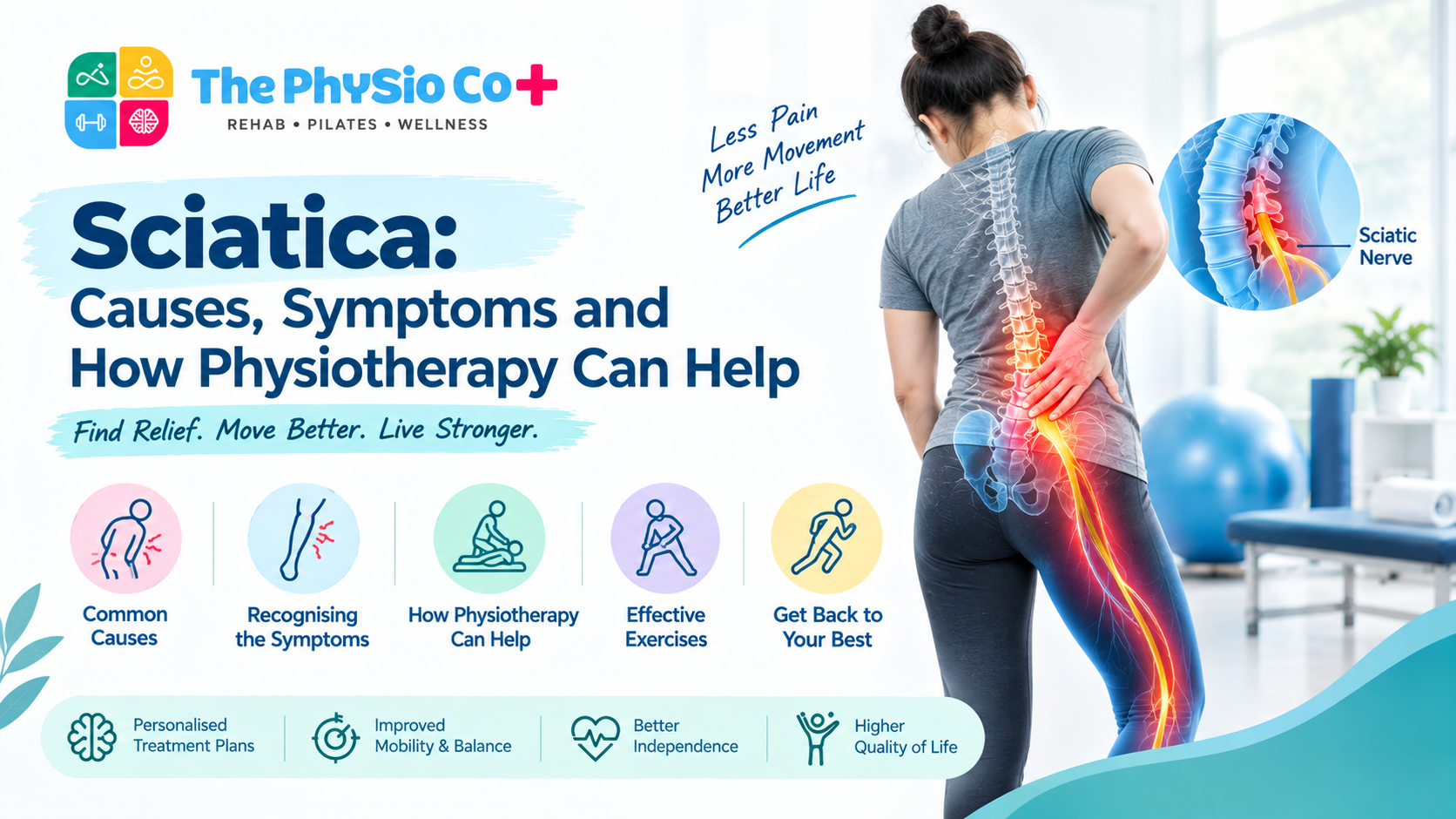

Sciatica
Pain that starts around the lower back or buttock and travels down the leg can make everyday activities such as sitting, walking, bending or sleeping difficult. One possible cause is sciatica, a condition associated with irritation or compression of the sciatic nerve or related nerve roots.
Sciatica commonly causes pain in the buttock and back of the leg and may also be associated with tingling, numbness or weakness. Symptoms can vary from person to person, which is why an individual assessment is important.
If you’re searching for best sciatica physiotherapy in Delhi, understanding the condition and available treatment options is an important first step.
What Is Sciatica?
Sciatica refers to symptoms affecting the distribution of the sciatic nerve, which travels from the lower back through the buttocks and down the leg.
Unlike ordinary lower back pain, sciatica often involves leg symptoms. You may experience:
- Pain travelling from the lower back or buttock into the leg
- Burning or shooting pain
- Tingling or “pins and needles”
- Numbness
- Leg or foot weakness
- Pain that becomes worse with certain movements
- Difficulty sitting, standing or walking comfortably
The symptoms may develop suddenly or gradually. In some people, leg pain can be more noticeable than back pain.
What Causes Sciatica?
Sciatica can occur when structures around the lower spine irritate or compress a nerve.
Common causes include:
1. Slipped or Herniated Disc
A disc between the vertebrae can protrude and irritate a nearby nerve root. Disc problems are among the common causes associated with sciatica.
2. Spinal Stenosis
Spinal stenosis involves narrowing around the spaces through which nerves travel. This can contribute to nerve irritation and leg symptoms.
3. Spondylolisthesis
This occurs when one vertebra moves relative to another and may contribute to narrowing or irritation around spinal nerves.
4. Back Injury
Certain injuries can irritate tissues around the lower spine and contribute to sciatic symptoms.
It is important to remember that not every case of leg pain is sciatica. A physiotherapist or doctor can assess your symptoms and determine whether further investigation is needed.
What Does Sciatica Pain Feel Like?
Sciatica can feel different depending on the person and the structures involved.
You may notice:
Sharp or shooting pain:
Pain may travel from the lower back or buttock down the leg.
Burning pain:
Some people describe the pain as burning or electric.
Tingling:
You may experience pins and needles in the buttock, thigh, calf or foot.
Numbness:
Reduced sensation can occur along the affected nerve distribution.
Weakness:
Some people may experience weakness in the leg or foot.
Sciatica vs Lower Back Pain: What’s the Difference?
Lower back pain does not automatically mean you have sciatica.
With ordinary lower back pain, symptoms may remain mainly around the lower back.
With sciatica, symptoms commonly involve the buttock and leg, potentially accompanied by tingling, numbness or weakness.
A proper assessment helps distinguish between different causes of back and leg pain rather than assuming every case is a “trapped nerve.”
When Should You See a Physiotherapist for Sciatica?
You may consider physiotherapy assessment if your symptoms are:
- Interfering with walking or daily activities
- Making sitting or standing difficult
- Affecting your sleep
- Recurring frequently
- Associated with reduced movement
- Affecting your ability to exercise or work
- Not improving with appropriate self-management
Sciatica often improves over time, but persistent, worsening or activity-limiting symptoms should be assessed by a healthcare professional.
How Can Physiotherapy Help With Sciatica?
A physiotherapy programme for sciatica should be individualised rather than based on one exercise or technique for everyone.
At The Physio Co+ Physiotherapy, assessment may help identify factors contributing to your symptoms, movement limitations and functional difficulties.
Depending on your presentation, physiotherapy may include:
1. Detailed Assessment
Your physiotherapist may assess:
- Pain location and behaviour
- Lumbar and hip movement
- Strength
- Sensation
- Functional movement
- Walking pattern
- Relevant neurological signs
- Activities that increase or reduce symptoms
This helps determine an appropriate rehabilitation approach.
2. Exercise Therapy
Exercise is an important component of physiotherapy management for low back pain and sciatica. Exercise programmes can include strengthening, mobility, flexibility, motor-control and aerobic activities depending on the individual’s needs and capabilities.
Your physiotherapist may prescribe exercises designed to improve:
- Core and trunk strength
- Hip strength
- Mobility
- Movement control
- General physical capacity
- Functional tolerance
3. Mobility Exercises
Depending on your assessment, specific mobility exercises may be used to improve movement and reduce functional limitations.
However, not every exercise is suitable for every person with sciatica. An exercise that feels helpful for one person may aggravate symptoms in another.
4. Neural Mobility
In selected cases, physiotherapy may incorporate techniques aimed at improving the movement and tolerance of neural tissues.
These should be appropriately assessed and progressed rather than performed aggressively.
5. Manual Therapy
Manual therapy may sometimes be used alongside an active rehabilitation programme. The aim is generally to help with symptoms and movement so that the person can participate more comfortably in rehabilitation.
Physiotherapy for sciatica commonly combines exercise advice with other appropriate techniques rather than relying on passive treatment alone.
6. Education and Activity Modification
Understanding your symptoms can be an important part of recovery.
Your physiotherapist may help you understand:
- Which activities currently aggravate your symptoms
- How to gradually return to normal activities
- How to manage prolonged sitting
- How to modify exercise temporarily
- How to progress activity safely
NICE guidance recognises exercise and self-management as important components of managing low back pain and sciatica.
What Exercises Are Good for Sciatica?
There is no single “best exercise” for everyone with sciatica.
Depending on the assessment, rehabilitation may include exercises for:
- Trunk and core control
- Hip and lower-limb strength
- Mobility
- Walking and aerobic activity
- Movement control
- Gradual functional strengthening
NHS guidance also recommends staying as active as possible and beginning gentle activity as tolerated rather than remaining in bed or sitting for prolonged periods.
A physiotherapist can help determine which exercises are appropriate for your symptoms and stage of recovery.
Can Physiotherapy Cure Sciatica?
It is better to think of physiotherapy as a way to manage symptoms, improve function and support recovery, rather than promising a guaranteed “cure.”
Many cases of sciatica improve over several weeks to months. However, recovery depends on factors such as the underlying cause, severity of symptoms, neurological involvement, activity level and individual health factors.
If symptoms are persistent, worsening or associated with significant neurological changes, medical assessment may be necessary.
Can Sciatica Come Back?
Yes. Sciatica can recur after an episode has improved. Staying physically active, maintaining appropriate strength and gradually returning to normal activities may help support long-term back health.
A physiotherapist can also help you develop an exercise and movement routine appropriate for your individual needs.
When Is Sciatica an Emergency?
Most cases of sciatica are not emergencies. However, certain symptoms require urgent medical assessment.
Seek emergency medical care if you develop:
- Severe or worsening weakness or numbness in both legs
- Numbness around the genitals or anus
- Difficulty starting urination or inability to urinate
- Loss of bladder control
- Loss of bowel control
- Sciatica affecting both sides along with significant neurological symptoms
These symptoms can indicate serious nerve compression, including cauda equina syndrome, which requires urgent assessment.
Do not attempt to manage these symptoms with physiotherapy alone.
How to Prevent Sciatica From Coming Back
While recurrence cannot always be prevented, maintaining an active lifestyle can support your overall back and physical health.
Helpful habits may include:
- Regular physical activity
- Gradual strength training
- Avoiding prolonged periods of sitting
- Using appropriate lifting techniques
- Maintaining good movement habits
- Building physical capacity gradually
- Following an individualised rehabilitation programme when required
The goal isn’t to avoid movement because of fear of back pain. Instead, rehabilitation generally focuses on gradually improving your ability to move and perform everyday activities.
Why Choose Physiotherapy for Sciatica in Delhi?
If you’re searching for best sciatica physiotherapy in Delhi, the most important thing is to look for an approach that begins with a proper assessment rather than simply offering the same treatment to everyone.
At The Physio Co+, physiotherapy focuses on assessment, personalised rehabilitation, movement, strength and functional recovery.
Explore Physiotherapy at The Physio Co+
Located in Vasant Kunj, Delhi, The Physio Co+ provides physiotherapy and rehabilitation for various musculoskeletal and neurological conditions.
The Physio Co+
D-10, Nangal Dewat, Sector D, Vasant Kunj,
New Delhi, Delhi 110070
Phone: +91 9650981969
Frequently Asked Questions About Sciatica
1. Can physiotherapy help with sciatica?
Yes. Physiotherapy can include individualised exercise, activity advice, education and appropriate manual or movement-based techniques to help manage symptoms and improve function.
2. How long does sciatica take to recover?
Recovery varies. Many cases improve within several weeks to a few months, although some symptoms can last longer.
3. Should I rest if I have sciatica?
Prolonged bed rest or inactivity is generally not recommended. Staying gently active and gradually returning to normal activities can support recovery, provided activities are appropriate for your symptoms.
4. Can sciatica go away without surgery?
Many people with sciatica improve without surgery. Treatment depends on the underlying cause, severity and progression of symptoms.
5. Is walking good for sciatica?
Walking can be a useful form of gentle activity for many people, but the appropriate amount depends on your symptoms and tolerance. Gradual activity is generally preferable to prolonged inactivity.
6. Can a slipped disc cause sciatica?
Yes. A slipped or herniated disc can irritate or compress a nearby nerve and cause sciatic symptoms.
7. When should I see a physiotherapist for sciatica?
Consider an assessment when pain is affecting your walking, work, sleep, exercise or everyday activities, particularly if symptoms are persistent or recurring.
Final Takeaway
Sciatica can cause more than just lower back pain. Pain, tingling, numbness or weakness travelling into the leg can significantly affect everyday life.
The good news is that many people with sciatica improve with appropriate conservative management, and physiotherapy can play an important role through assessment, education, exercise and gradual rehabilitation.
If you’re experiencing persistent or activity-limiting sciatic symptoms, a physiotherapy assessment can help determine the most appropriate approach for your condition.
Looking for sciatica physiotherapy in Delhi?
Contact The Physio Co+ in Vasant Kunj for an individual assessment and rehabilitation plan.